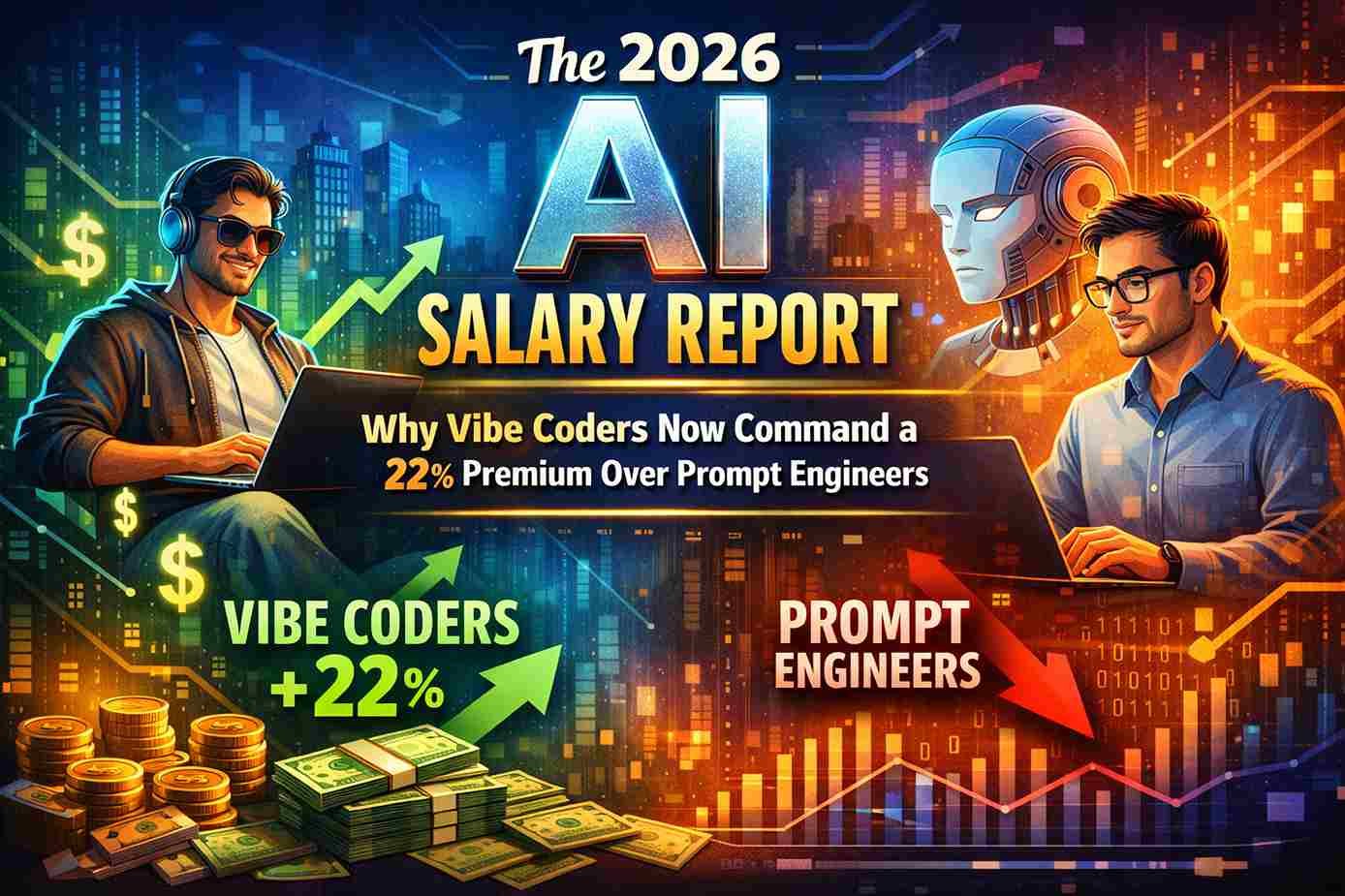
The 2026 AI Salary Report, the artificial intelligence job market has reached a definitive tipping point: the era of ‘Prompt Engineering’ as a standalone high-value skill is officially over, replaced by the rise of the ‘Vibe Code.’ According to the Q2 2026 AI Global Compensation Index, professionals who specialize in high-level AI orchestration—popularly known as Vibe Coders—now command a 22% salary premium over traditional prompt engineers. While the previous three years focused on ‘talking to the machine,’ 2026 is defined by ‘architecting with the machine,’ where the ability to maintain the ‘vibe’ (architectural integrity and user intent) across autonomous agent fleets is the most lucrative skill in tech.

The 2026 AI Salary Report: The Death of the Prompt and the Rise of the Vibe
For the last three years, the tech world obsessed over the ‘Prompt Engineer.’ In 2023 and 2024, the ability to craft the perfect string of text to coax a coherent response from an LLM was a golden ticket. But as of May 13, 2026, that ticket has lost its luster. The market has matured. We are no longer in the business of asking AI to perform tasks; we are in the business of directing AI systems to build entire ecosystems.
This shift has given birth to the Vibe Coder—a role that combines system architecture, product intuition, and the ability to steer autonomous agents through sheer ‘intent’ and ‘vibe.’
The Salary Gap: By the Numbers
The 22% premium isn’t just a statistical anomaly; it represents a fundamental shift in how value is perceived in the AI-integrated workforce. While Prompt Engineers focus on inputs, Vibe Coders focus on outcomes.
Table 1: 2026 Global AI Compensation Benchmarks (USD)
| Role Profile | Mid-Level Salary (2025) | Mid-Level Salary (2026) | % Change | Primary Toolset |
|---|---|---|---|---|
| Vibe Coder (Orchestrator) | $185,000 | $215,000 | +16.2% | Multi-Agent IDEs, Intent-Logic Gates |
| AI Solutions Architect | $190,000 | $205,000 | +7.8% | Azure AI, AWS Bedrock, Custom LLMs |
| Prompt Engineer | $172,000 | $176,000 | +2.3% | Playground, PromptHub, Claude 4 Pro |
| Junior AI Assistant | $95,000 | $88,000 | -7.3% | Basic LLM interfaces |
What is a ‘Vibe Coder’?
The term ‘Vibe Coding‘ originated in early 2025 as a joke among developers using highly autonomous IDEs. It referred to the process of simply ‘giving the AI the vibe of what you want’ and letting it generate 1,000+ lines of code, tests, and deployment scripts.
In 2026, the term has been professionalized. A Vibe Coder is defined by three core competencies:
- High-Level Intent Architecture: The ability to define system requirements without getting bogged down in syntax.
- Agentic Supervision: Managing a fleet of autonomous AI agents (Devin 3.0, OpenDevin, etc.) that handle backend, frontend, and QA simultaneously.
- The ‘Vibe’ Check: A highly developed sense of UX and logic flow that ensures the AI-generated system actually serves the end-user, rather than just being ‘syntactically correct garbage.’
Why the Premium? The Economics of Abstraction
As AI models became more ‘reasoning-heavy’ in late 2025 (post-GPT-5 and Claude 4.5 releases), the value of the ‘perfect prompt’ diminished. The models became smart enough to understand messy, human-like instructions.
However, the complexity of the projects increased. Instead of asking for a ‘Python script to scrape a website,’ companies now want a ‘fully autonomous market intelligence engine that adapts its strategy hourly.’
Prompt Engineers are still stuck at the script level. Vibe Coders are building the engines.
Table 2: Skill Demand Growth (May 2025 – May 2026)
| Skillset | Demand Increase | Average Hourly Rate (Contract) |
|---|---|---|
| Multi-Agent Orchestration | +340% | $275/hr |
| System Intent Design | +210% | $210/hr |
| Context Window Management | -45% | $110/hr |
| Prompt Optimization | -60% | $85/hr |
Tool Review: The Vibe Coder’s Tech Stack for 2026
To command these premium salaries, professionals have moved away from simple chat interfaces. The 2026 ‘Make-Money-Online’ elite are using a specific suite of tools:
- Cursor 5.0 Platinum: The gold standard for ‘vibe’ orchestration. It allows for natural language system-wide changes that feel more like ‘editing a movie’ than ‘writing code.’
- Windsurf Genesis: A new contender in 2026 that specializes in ‘Flow-State Programming,’ where the IDE predicts the architectural ‘vibe’ before the developer even types.
- AgentMesh Pro: A middleware tool used to connect different AI agents from different providers (OpenAI, Anthropic, and local Llama 4 models) into a single cohesive workstream.
How to Transition and Capture the 22% Premium
If you are currently a Prompt Engineer or a traditional developer, the path to becoming a Vibe Coder involves ‘unlearning’ the need for control.
- Shift to Systems Thinking: Stop thinking about ‘the next line of code’ and start thinking about ‘the state of the application.’
- Master the Review, Not the Input: Your value in 2026 is your ability to audit AI-generated systems at a high level.
- Learn ‘Intent Logic’: Practice describing complex business logic in ways that are unambiguous to high-reasoning models.
The ‘Make-Money-Online’ Angle: The Solopreneur Vibe Coder
In 2026, we are seeing a massive surge in ‘Vibe Solopreneurs.’ These are individuals using Vibe Coding techniques to launch SaaS products in days rather than months. The 22% salary premium in the corporate world is mirrored by a 40% increase in revenue for AI-assisted micro-SaaS owners who have mastered these tools.
Case Study: In April 2026, ‘NexThrive,’ a Fintech startup, replaced their traditional team of six prompt-heavy developers with two ‘Vibe Coders’ and a suite of autonomous agent tools (Cursor 5.0 and Devin 3.0). Within 30 days, the Vibe Coders successfully shipped a compliant, cross-border payment gateway that had previously been in ‘development hell’ for eight months. By focusing on the ‘architectural vibe’ and high-level system flows rather than manual code correction, the team reduced their ‘Time-to-Market’ by 75%. The two Vibe Coders were rewarded with a 30% performance bonus on top of their already premium $220,000 base salaries, proving that for modern enterprises, speed and architectural cohesion are worth more than granular prompt expertise
Frequently Asked Questions
Is Prompt Engineering dead in 2026?
It’s not dead, but it has become a ‘commodity skill.’ Like typing or basic Excel knowledge, it’s expected of everyone and no longer commands a unique salary premium.
Do I need to know how to code to be a Vibe Coder?
You need to understand ‘Code Logic.’ While you might not spend your day typing syntax, you must be able to read and audit the code the AI generates to ensure the ‘vibe’ remains intact and secure.
Which tools should I learn first?
Focus on Agentic IDEs like Cursor 5.0 and Windsurf. Additionally, learn agent orchestration frameworks like LangChain 3.0 or AutoGen.
Conclusion
The 2026 AI Salary Report confirms a major shift in the digital economy. The premium has moved from those who can *speak* to AI to those who can *lead* AI. Vibe Coders represent the new elite—architects of intent who use AI as a high-fidelity instrument rather than a simple chatbot. For those looking to maximize their earnings in the second half of 2026, the directive is clear: stop perfecting your prompts and start perfecting your vibes. The next decade belongs to the orchestrators.