Do Mastering Luma Dream Machine and Kling AI :as of Wednesday, April 29, 2026, the landscape of digital content creation has undergone a seismic shift. We are no longer in the ‘experimental’ phase of AI video; we are in the era of AI dominance. With Luma Dream Machine and Kling AI leading the charge, creators are now producing Hollywood-grade cinematic sequences from mere text prompts. This guide provides an authoritative deep dive into mastering these tools to dominate social media algorithms and build a profitable AI-driven media empire.
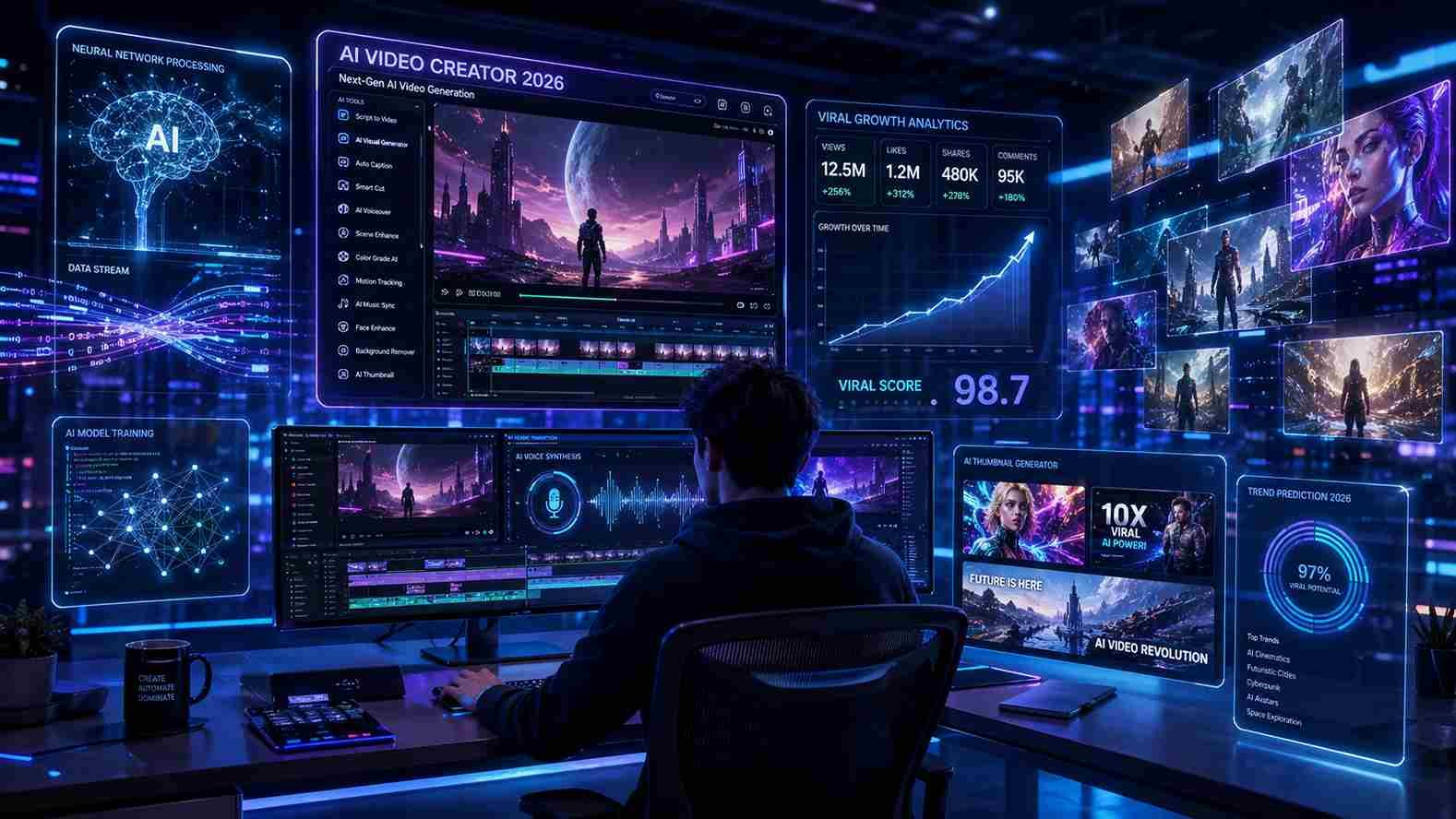
Data Visualization: 2026 User Growth: AI Video Tools: User’s Groth chart

The State of AI Video in 2026: The New Gold Rush
In early 2026, video content accounts for over 82% of all internet traffic. However, the barrier to entry for high-quality production has vanished. Tools like Luma Dream Machine and Kling AI have evolved from basic generators into full-stack creative suites. While 2024 was about ‘wowing’ people with short clips, 2026 is about narrative cohesion, character consistency, and viral engineering.
Evolution & Origin: From GANs to Temporal Transformers
The journey to Luma and Kling didn’t happen overnight. To master these tools, one must understand their lineage:
- The GAN Era (2014-2020): Early video generation was blurry and restricted to 1-2 seconds.
- Diffusion Breakthrough (2022-2023): The arrival of Stable Video Diffusion (SVD) and Runway Gen-2 introduced the concept of ‘latent space’ manipulation.
- The Transformer Revolution (2024-2025): OpenAI’s Sora set the stage, but Kling AI (originating from Kuaishou’s research labs) and Luma AI (leveraging their 3D NeRF expertise) democratized the technology.
Luma Dream Machine was built on the foundation of 3D world modeling, allowing for superior camera movement. Kling AI, conversely, utilized massive datasets of real-world physics to solve the ‘morphing’ issue that plagued earlier models.
Luma Dream Machine vs. Kling AI: The 2026 Comparison
Choosing the right tool depends on your specific creative objective. Below is a breakdown of their current capabilities as of April 2026.
| Feature | Luma Dream Machine (v3.5) | Kling AI (Global Pro) |
|---|---|---|
| Max Clip Duration | 20 Seconds (Extendable to 2 mins) | 30 Seconds (Native) |
| Physics Accuracy | High (Excellent fluid dynamics) | Exceptional (Realistic human movement) |
| Camera Control | Advanced (Keyframe-based 3D paths) | Intermediate (Prompt-based) |
| Resolution | 4K Native Upscaling | 4K with Dolby Vision Support |
| Rendering Speed | < 60 Seconds per 5s clip | 2-3 Minutes (High-Priority Queue) |
| Pricing Model | Credit-based & Pro Subscription | Monthly Unlimited Tiers |
Strategic Workflow: Creating the Viral ‘Hook’
To go viral in 2026, you cannot rely on ‘raw’ AI output. You need a Hybrid Workflow:
- Ideation (ChatGPT-5/Claude 4): Generate a high-retention script focusing on a ‘Pattern Interrupt’ in the first 1.5 seconds.
- Asset Generation (Luma/Kling): Use Luma for expansive landscape ‘establishing shots’ and Kling for character-driven emotional close-ups.
- Refinement: Use AI-to-Video ‘In-painting’ to fix glitches in hands or eyes.
- Sound Design (ElevenLabs + Udio): Never use generic music. Generate a custom cinematic score that matches the BPM of your AI video cuts.
The ‘Actor-Action-Setting-Style’ (AASS) Prompting Framework
To get consistent results, use this structured prompt formula:
- Actor: [High-detail subject description, e.g., ‘An elderly cyborg with brass gears visible’]
- Action: [Verbal dynamic, e.g., ‘slowly weeping golden oil’]
- Setting: [Atmospheric context, e.g., ‘inside a neon-lit rain-slicked Tokyo alleyway’]
- Style: [Cinematographic instruction, e.g., ‘Shot on Arri Alexa, 35mm lens, f/1.8, cinematic lighting, 8k’]
Making Money Online: The 2026 Monetization Matrix
Mastering these tools is the ‘skill’; the ‘business’ is how you deploy it.
- AI Stock Agencies: In 2026, stock sites like Adobe Stock and specialized AI-only marketplaces pay premiums for high-quality, 4K consistent AI clips.
- Faceless YouTube Channels: Channels focusing on ‘AI Documentaries’ or ‘Horror Narratives’ are generating $10k-$50k/month in ad revenue by producing 10-minute videos using Luma for 100% of the visuals.
- B2B Ad Creative: Marketing agencies are moving away from expensive film shoots. Offering ‘Rapid Prototyping’ of ad concepts using Kling AI is a high-ticket service.
| Monetization Path | Effort Level | Potential Monthly Revenue (USD) |
|---|---|---|
| Stock Footage Sales | Low | $500 – $3,000 |
| YouTube Automation | Medium-High | $2,000 – $25,000 |
| Custom Client Work | High | $5,000 – $50,000+ |
| Digital Products/LUTs | Low | $1,000 – $5,000 |
Case Study: The ‘Neo-Tokyo 2099’ Project: In January 2026, creator @AIVisuals leveraged Kling AI to create a 60-second trailer for a non-existent cyberpunk film. By using Kling’s ‘Character Consistency’ feature and Luma’s ‘Dream Machine’ for the intricate drone shots, the video garnered 45 million views across TikTok and Instagram within 72 hours. The creator subsequently landed a $100,000 contract with a major streaming platform to produce a series of animated shorts using the same workflow. This proved that AI consistency was no longer the ‘bottleneck’ for professional adoption.
Frequently Asked Questions
Can I use Kling AI for free in 2026?
Kling AI offers a daily ‘check-in’ system providing 66 free credits, but high-priority 4K rendering requires a Pro subscription starting at $10/month.
Is Luma Dream Machine better than Sora?
As of mid-2026, Luma is often preferred by independent creators for its superior camera control tools and faster rendering times, whereas Sora remains slightly more physically accurate but more restricted by safety filters.
How do I avoid the ‘AI look’ in my videos?
The key is post-processing. Apply real film grain, use professional color grading (LUTs), and integrate 10-15% real-world footage or overlays to ground the AI-generated imagery.
Conclusion
The mastery of Luma Dream Machine and Kling AI is the most valuable digital skill of 2026. We are witnessing the total democratization of Hollywood-level production. To stay ahead, creators must move beyond simple prompts and embrace a holistic ‘Director’ mindset. As these tools continue to evolve toward real-time generation, the only limit will be the depth of your imagination. Start building your AI video portfolio today; the viral wave of tomorrow is already being rendered.