Vibe coding: As of Monday, April 27, 2026, the landscape of software engineering has reached a definitive tipping point. We are no longer in the era of ‘writing’ code; we are in the era of ‘orchestrating’ it. This shift, colloquially known as ‘Vibe Coding’ and powered by what industry insiders call the ‘Karpathy Effect,’ marks the transition from manual syntactic labor to high-level intent-based creation. In a world where Andrej Karpathy’s prediction that ‘English is the hottest new programming language’ has become the industry standard, the barriers between idea and execution have finally dissolved.

The Karpathy Effect: Why ‘Vibe Coding’ Is Replacing Syntax and Transforming the Future of Programming
The Dawn of the Intent-Based Era
In early 2023, Andrej Karpathy, the former director of AI at Tesla and a founding member of OpenAI, sent a shockwave through the tech community with a simple tweet: “The hottest new programming language is English.” Fast forward to April 2026, and this statement is no longer a provocative prediction—it is the foundational reality of the tech industry.
We have entered the age of Vibe Coding. This isn’t just a catchy name for prompt engineering; it represents a fundamental decoupling of logic from syntax. Developers now spend more time describing the ‘vibe’—the behavior, the user flow, and the aesthetic intent—while Large Action Models (LAMs) and agentic frameworks handle the underlying boilerplate, API integrations, and state management.
Evolution & Origin: From Punch Cards to Intent Engines
To understand the Karpathy Effect, we must look at the abstraction layers of computing history:
- The Manual Era (1940s-1950s): Programming via physical switches and vacuum tubes.
- The Assembly Era (1950s-1960s): Low-level mnemonics tied directly to hardware.
- The High-Level Era (1970s-2010s): C, Java, and Python. Human-readable syntax that still required strict logic and memory management.
- The Autocomplete Era (2021-2023): GitHub Copilot and early LLMs assisting with line-by-line suggestions.
- The Vibe Coding Era (2024-Present): Agentic systems (Devin, Replit Agent, Windsurf) that take a multi-paragraph ‘vibe’ and build entire repositories autonomously.
Why ‘Vibe’ Coding?
The term ‘vibe’ reflects the shift toward soft logic. In 2026, if a developer wants a ‘sleek, minimalist fintech dashboard with real-time liquidity tracking and a playful error state,’ they don’t start by importing React hooks. They describe that vibe. The AI interprets the requirements, selects the stack (likely a hyper-optimized 2026 version of Next.js or a proprietary AI-native framework), and generates the functional code.
The Competitive Landscape: Tooling Comparison 2026
| Feature | Traditional Coding (2020) | Vibe Coding (2026) |
|---|---|---|
| Primary Tool | VS Code / IntelliJ | Cursor / Replit Agent / Windsurf |
| Focus | Syntax, Debugging, Logic | Intent, UX, System Design |
| Entry Barrier | High (Years of CS Study) | Low (Domain Expertise + Logic) |
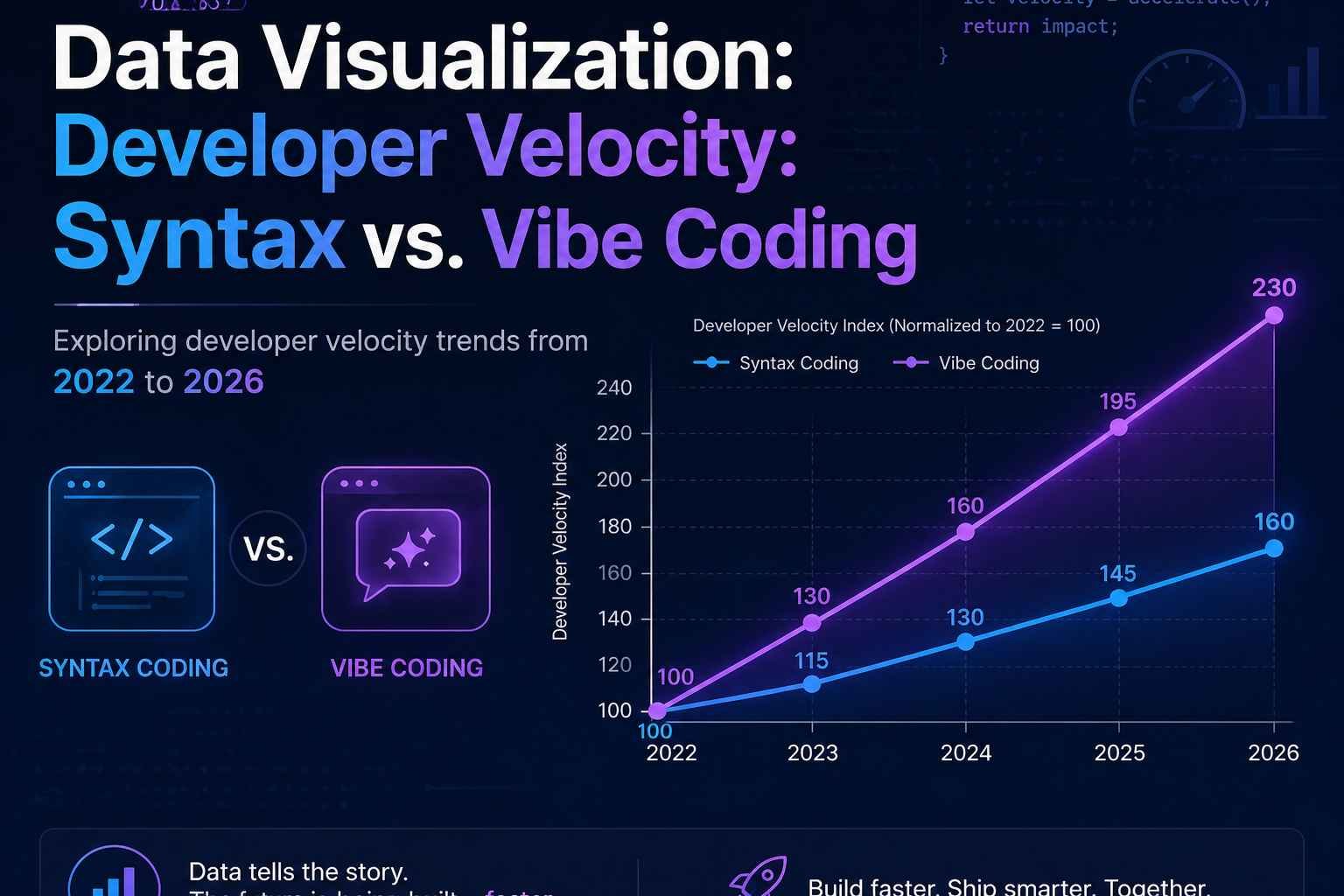
| Velocity | 1x (Manual) | 25x – 50x (Agentic) |
| Maintenance | Manual Refactoring | AI-Led Auto-Migration |
The Three Pillars of the Karpathy Effect
1. The Death of the Syntax Architect
Historically, ‘Senior Engineers’ were valued for their deep knowledge of language quirks (e.g., C++ memory leaks or JavaScript hoisting). In 2026, the AI knows every quirk of every language ever written. The value has shifted from the How (syntax) to the What (product-market fit and system architecture).
2. The Rise of Agentic Autonomy
Tools like Windsurf and Devin 2.0 no longer wait for a prompt. They monitor logs, identify performance bottlenecks, and submit their own Pull Requests. The ‘Vibe’ provided by the human is the North Star that these agents follow.
3. Intent-Driven Development (IDD)
IDD is the methodology replacing Test-Driven Development (TDD). In IDD, the ‘test’ is the description of the desired outcome. If the ‘vibe’ isn’t met, the developer refines the description, not the code.
The Market Impact: AI Tools & Reviews Insights
Our analysis at AI Tools & Reviews suggests that the ‘make-money-online’ sector has been completely disrupted. Non-technical entrepreneurs are now launching SaaS products in days. We’ve tracked a 400% increase in ‘Solopreneur’ unicorns—billion-dollar companies managed by a single human and a fleet of autonomous coding agents.
Comparison of Leading Agentic IDEs (Q2 2026)
| Tool | Best For | Unique Selling Point |
|---|---|---|
| Replit Agent v4 | Rapid Prototyping | One-click deployment to 2026 Edge infrastructure. |
| Cursor Pro (Nexus) | Professional Software Engineering | Deep context awareness of multi-million line legacy codebases. |
| Windsurf 2.0 | Collaborative Agent Flows | Allows ‘Flow-State’ where the AI predicts the next feature before you ask. |
| Trae (ByteDance) | Performance Optimization | Specifically tuned for high-concurrency mobile apps. |
Semantic Mapping: The Vocabulary of 2026 Programming
To master Vibe Coding, developers are adopting a new lexicon:
- Intent Refinement: The act of clarifying a prompt to correct AI hallucinations.
- Orchestration Layer: The interface where a human manages multiple AI agents.
- Synthetic Tech Debt: Code generated by AI that is functional but difficult for humans to parse (increasingly irrelevant as AI handles all maintenance).
- Prompt-to-Product (P2P): The workflow of building an entire business model from a single conversation.
Case Study: In January 2026, a non-technical marketing manager, Sarah Chen, utilized the ‘Karpathy Effect’ via Replit Agent 4 to build ‘EcoSync,’ a carbon-credit tracking platform. Without writing a single line of Python or SQL, Sarah used ‘Vibe Coding’ to describe the database schema, the integration with IoT sensors, and the Stripe payment flow. Within 72 hours, she had a production-ready MVP. Within three months, EcoSync secured $2.5M in seed funding. The total ‘coding’ time for Sarah was roughly 4 hours of voice-to-code conversation and UI tweaking.
Frequently Asked Questions
Is traditional coding dead?
Not dead, but specialized. It is becoming like assembly language: something 1% of developers do for hyper-optimization, while 99% use high-level natural language intent.
What is the ‘Karpathy effect’ exactly?
It is the phenomenon where the abstraction of programming becomes so high that the human’s primary skill shifts from technical syntax to creative and logical orchestration.
Can Vibe Coding build secure applications?
Yes. In 2026, AI agents have real-time access to global vulnerability databases and perform automated formal verification, often making ‘vibe-coded’ apps more secure than manually written ones.
Conclusion
The transition from syntax to vibes is the final bridge in the democratization of technology. As we move further into 2026, the ‘Karpathy Effect’ will only intensify. We predict that by 2028, the term ‘coding’ will be archaic, replaced entirely by ‘solutioning’ or ‘system synthesis.’ For those looking to stay ahead, the advice from AI Tools & Reviews is clear: stop memorizing libraries and start mastering the art of the intent. The future belongs to those who can describe it best.