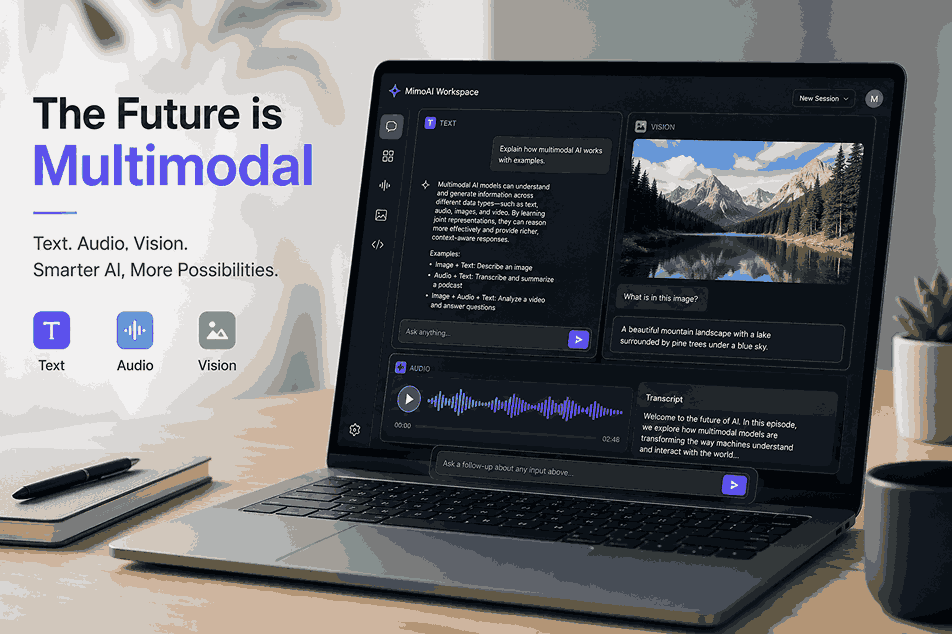
Gemma 4 12B Launch 2026: Why Google’s New Local AI Model Matters for Developers
Google just made a very smart move in local AI.
On June 3, 2026, Google DeepMind introduced Gemma 4 12B, a new open model built to run serious multimodal AI workloads on everyday laptops.
That matters because most AI model launches still assume cloud-first budgets, server-heavy deployment, or developer setups that feel unrealistic for smaller teams.
Gemma 4 12B pushes in the opposite direction.
It is designed to handle text, images, and native audio inputs, run with around 16GB of VRAM or unified memory, and stay open under an Apache 2.0 license.
Honestly, that combination is what makes this launch interesting.
It is not just another benchmark story.
It is a practical signal that local, agentic AI is becoming much more usable for real developers, indie builders, and product teams.
What Happened on June 3, 2026?
Google announced Gemma 4 12B through its official blog on June 3, 2026.
The company positioned it between the lighter Gemma 4 E4B model and the larger 26B Mixture of Experts option.
The headline promise is simple: near-26B-class capability, but with a memory footprint small enough for laptops.
| Launch Detail | What Google Confirmed | Why It Matters |
|---|---|---|
| Release date | June 3, 2026 | Fresh recency makes this a live search trend right now. |
| Model type | Open multimodal model with 12B parameters | Useful for builders who want flexibility without closed API lock-in. |
| Input modes | Text, image, and native audio input | Expands use cases beyond plain chat or code generation. |
| Hardware target | Runs locally with 16GB VRAM or unified memory | Makes advanced local AI more accessible to laptop users. |
| License | Apache 2.0 | Important for commercial experimentation and deployment. |
Google also published a developer guide the same day.
That second signal matters more than most people think.
When a launch comes with implementation guidance, runtime support, and distribution through tools developers already use, it usually means the company wants adoption fast, not just headlines.
Why Gemma 4 12B Is Trending So Fast
This launch sits at the center of three very active search themes.
- Local AI models that can run on personal hardware.
- Multimodal AI that does more than text.
- Agentic development workflows for coding, automation, and research.
That is why the story moved quickly across official Google channels, Ars Technica, Hacker News, and Reddit communities focused on local models.
On June 4, 2026, the topic was already pulling strong attention from builders asking the same questions: Can this run on my machine? Is it good enough for coding? Does it actually reduce dependence on expensive APIs?
In my experience, those are exactly the questions that turn a model announcement into evergreen traffic.
Developers do not just want specs. They want deployment relevance.
Gemma 4 12B in Plain English
Here is the simple version.
Gemma 4 12B is Google’s attempt to make strong multimodal AI feel local, fast, and practical.
Instead of forcing developers to choose between tiny edge models and heavier cloud-class models, Google is trying to open a middle lane.
What stood out to me is the positioning.
This is not being sold as a toy model for demos.
It is being sold as a serious builder model for reasoning, coding, audio understanding, video understanding, and agent workflows.
| Dimension | Gemma 4 12B Positioning | Practical Takeaway |
|---|---|---|
| Performance | Nears the larger 26B model on standard benchmarks | Smaller hardware does not always mean weak output. |
| Multimodality | Handles image and native audio input | Useful for voice, visual, and document-driven apps. |
| Local deployment | Designed for 16GB-class laptops | Good fit for developers who want privacy or lower operating cost. |
| Latency | Ships with multi-token prediction drafters | Google is clearly targeting smoother interactive workflows. |
| Openness | Apache 2.0 release | Better for experimentation, fine-tuning, and product integration. |
The Big Technical Shift: Encoder-Free Multimodal Design
The most interesting part of this launch is not the parameter count.
It is the architecture.
Traditional multimodal systems often use separate encoders for vision and audio before passing information to the main language model.
That works, but it can increase memory use, add latency, and complicate tuning.
Google says Gemma 4 12B uses a unified, encoder-free design instead.
Images and audio are pushed into the model backbone more directly, which simplifies the stack.
This is where things get interesting.
If that architecture performs reliably in the wild, it can make local multimodal apps easier to build and cheaper to run.
It also helps explain why Google is pushing the laptop angle so hard.
| Approach | Typical Older Multimodal Stack | Gemma 4 12B Direction |
|---|---|---|
| Vision processing | Separate vision encoder | Lightweight embedding path into the LLM backbone |
| Audio processing | Separate audio encoder | Raw audio projected directly into the model input space |
| Memory use | Higher due to multiple model parts | Reduced complexity for local inference |
| Tuning workflow | More fragmented | Cleaner multimodal tuning path for developers |
What Developers Can Actually Do With It
Google’s launch materials point toward several practical use cases.
And unlike vague AI launch pages, these are tied to actual tools and runtimes.
- Build local coding assistants that can reason across text and visual context.
- Create voice-driven apps using native audio input.
- Run document or screenshot analysis on-device for privacy-sensitive workflows.
- Prototype multimodal agents without sending everything to a cloud API.
- Experiment with local sandboxed automation on Macs and developer laptops.
After looking through the launch details, I think the strongest near-term angle is not “replace every frontier API.”
It is “move more useful AI work closer to the device.”
That includes internal tools, coding copilots, research helpers, transcription-adjacent workflows, and lightweight automation systems.
Where Gemma 4 12B Fits in the Current Market
The local model market is getting crowded.
Builders now compare Google Gemma, Meta open models, Qwen variants, and specialized coding or agent-tuned options almost week by week.
Gemma 4 12B stands out because it is not only about size.
It combines four things that rarely arrive together: laptop-ready deployment, multimodal support, official ecosystem support, and a major company pushing agent workflows around it.
| Buyer Need | Why Gemma 4 12B Looks Attractive | Potential Caveat |
|---|---|---|
| Lower inference cost | Local execution can reduce recurring API spend | Hardware setup still matters |
| Privacy control | On-device use limits data leaving the machine | Governance still depends on app design |
| Multimodal experimentation | Text, image, and audio open more product ideas | Real-world quality needs broader testing |
| Commercial use | Apache 2.0 lowers licensing friction | Deployment support stack still needs evaluation |
| Agent workflows | Google is pairing the model with skills and local tooling | Tool-calling reliability will matter more than launch benchmarks |
Gemma 4 12B vs Cloud-Only Thinking
Most AI teams still default to hosted APIs.
That makes sense when you need the best possible model or fast time to market.
But cloud-only thinking is getting expensive.
Many teams now care about token bills, latency, privacy, and dependency risk.
A local-capable model like Gemma 4 12B changes the conversation.
| Decision Area | Local Gemma 4 12B Option | Cloud-Only Option |
|---|---|---|
| Recurring cost | Higher upfront setup, lower variable inference cost | Low setup, ongoing token spend |
| Privacy | Better for sensitive local workflows | Depends on provider and compliance posture |
| Offline use | Possible in supported setups | Usually not possible |
| Peak capability | Good for many tasks, but not always frontier-best | Often stronger on hardest tasks |
| Customization | More room for direct tuning and control | More provider constraints |
Pros and Cons of the Launch
| Pros | Cons |
|---|---|
| Fresh official release with strong ecosystem support | Real-world tool-calling reliability still needs wider proof |
| Runs on 16GB-class laptops, which broadens access | “Can run” and “runs well for your workload” are not the same thing |
| Native audio input adds differentiated use cases | Developers will need time to validate audio quality in practice |
| Apache 2.0 licensing is commercially attractive | Some teams may still prefer larger hosted models for top-end reasoning |
| Fits the trend toward local agentic workflows | Operational setup is still more work than calling one hosted API |
The Tools Around the Model Matter Too
One reason this launch looks stronger than a random open-model drop is the surrounding stack.
Google says developers can use Gemma 4 12B through LM Studio, Ollama, Google AI Edge Gallery, Google AI Edge Eloquent, LiteRT-LM, Hugging Face Transformers, llama.cpp, MLX, SGLang, vLLM, and Unsloth.
That list matters.
Distribution is strategy.
If a model is technically impressive but painful to access, momentum dies fast. Google clearly understands that.
The company also tied the release to a new skills repository for agentic development.
That tells me Google does not want Gemma to sit in a model zoo. It wants Gemma to become part of actual development workflows.
Best Use Cases Right Now
If I were prioritizing Gemma 4 12B this week, I would test it in these scenarios first:
- Local developer copilots for teams that want more privacy.
- Voice-note to structured-summary workflows on-device.
- Screenshot, UI, and document review agents.
- Research assistants that combine text plus visual context.
- Cost-sensitive internal tools where API volume is becoming a problem.
I would not treat it as an automatic replacement for every premium hosted model.
That is the wrong framing.
The better question is: which workloads are now good enough to bring local?
30-Day Rollout Plan for Builders
| Timeframe | What to Do | Expected Outcome |
|---|---|---|
| Days 1-3 | Run small tests in LM Studio or Ollama on a 16GB-class machine | Validate speed, memory fit, and basic output quality |
| Days 4-7 | Compare Gemma 4 12B against your current API model for one workflow | See where local execution is already viable |
| Week 2 | Test one multimodal use case with screenshots, audio, or docs | Measure whether the new architecture helps your app |
| Week 3 | Try one agent flow with tools, files, or sandboxed code execution | Expose orchestration strengths and failure points |
| Week 4 | Decide whether to keep Gemma local, fine-tune it, or use it in a hybrid stack | Turn curiosity into a deployment decision |
What is Gemma 4 12B?
Gemma 4 12B is Google DeepMind’s open multimodal AI model launched on June 3, 2026. It supports text, image, and native audio input and is designed to run locally on laptops with around 16GB of VRAM or unified memory.
Why is Gemma 4 12B important?
It brings stronger local multimodal AI performance to everyday hardware, which can reduce cloud dependence, lower inference cost, and improve privacy for many developer workflows.
Comparision chart
| Model | Memory profile | Capability level | Best for |
|---|---|---|---|
| E4B | Lowest memory needs among the three; built for efficiency and low-latency use on constrained hardware blog+1 | Strong for lightweight multimodal use, but more limited than larger models blog+1 | Edge apps, local assistants, fast inference, resource-limited deployments blog+1 |
| 12B | Middle ground in memory usage; more demanding than E4B but still practical for local AI setups developers.googleblog+1 | Better balance of size and capability; positioned as a medium-sized multimodal model with broad utility developers.googleblog+1 | Local AI tools, multimodal assistants, general-purpose content workflows developers.googleblog+1 |
| 26B | Highest memory needs of the three; larger model with stronger runtime demands milvus+1 | Highest capability tier here; uses MoE architecture for strong quality-to-compute balance milvus+1 | High-quality reasoning, agentic workflows, production systems, best output quality milvus+1 |
FAQ: Gemma 4 12B Launch 2026
1. When did Google launch Gemma 4 12B?
Google launched Gemma 4 12B on June 3, 2026 through its official blog and developer channels.
2. What makes Gemma 4 12B different from other local AI models?
The biggest difference is its encoder-free multimodal design plus native audio input in a mid-sized model that still targets laptop-class hardware.
3. Can Gemma 4 12B run on a normal laptop?
Google says it is designed to run locally with 16GB of VRAM or unified memory, which puts it within reach for many higher-end consumer and developer laptops.
4. Is Gemma 4 12B open source?
Google released it under an Apache 2.0 license, which is highly favorable for commercial experimentation and product development.
5. Does Gemma 4 12B support audio input?
Yes. Google says this is the first mid-sized Gemma model with native audio input support.
6. What tools support Gemma 4 12B right now?
Google highlighted support across LM Studio, Ollama, Hugging Face, Kaggle, llama.cpp, MLX, SGLang, vLLM, Unsloth, LiteRT-LM, and Google AI Edge apps.
7. Is Gemma 4 12B good for coding?
Google positions it for coding and agent workflows, but teams should compare it against their current stack using their own repo and task mix before making a production call.
8. Is Gemma 4 12B better than cloud models?
Not in every case. The better view is that it makes more local workflows viable, especially when privacy, cost, and latency matter.
9. Why are developers excited about this launch?
Because it combines useful size, multimodal support, openness, and fast availability through familiar tools instead of locking everything behind one hosted interface.
10. What is the best first test for Gemma 4 12B?
Run one narrow workflow locally, such as code assistance, screenshot analysis, or voice-note summarization, and compare it against your current hosted model on cost, latency, and output quality.
11. Does Gemma 4 12B help with AI agents?
Yes, at least strategically. Google is explicitly connecting the model with agentic development tooling and skills, which suggests it sees Gemma as part of the broader agent stack.
12. Should startups pay attention right now?
Yes. For startups trying to control infrastructure cost while shipping AI features, local-capable models like this can unlock a more efficient product architecture.
Sources
- Google official launch post: Introducing Gemma 4 12B
- Google Developers Blog: Gemma 4 12B developer guide
- Google Developers Blog: bringing Gemma 4 12B to your laptop
- Ars Technica coverage of the June 3, 2026 launch
- Hacker News front page discussion context from June 4, 2026
Final Thoughts
Gemma 4 12B is not important because it is small.
It is important because it makes a bigger idea feel more real: useful multimodal AI that developers can run closer to their own workflows.
If Google’s performance claims hold up under broader testing, this model could become one of the most practical local AI options of the summer.
And even if your team stays cloud-heavy, this launch should still change your roadmap thinking.
More AI work is moving local.
More agent workflows are being designed around cost and control.
And more developers want models they can actually shape, not just rent.
That is why Gemma 4 12B matters right now.
If you are building AI products in 2026, this is a good week to test one workflow locally and measure where open, laptop-ready models can reduce cost without slowing your team down.