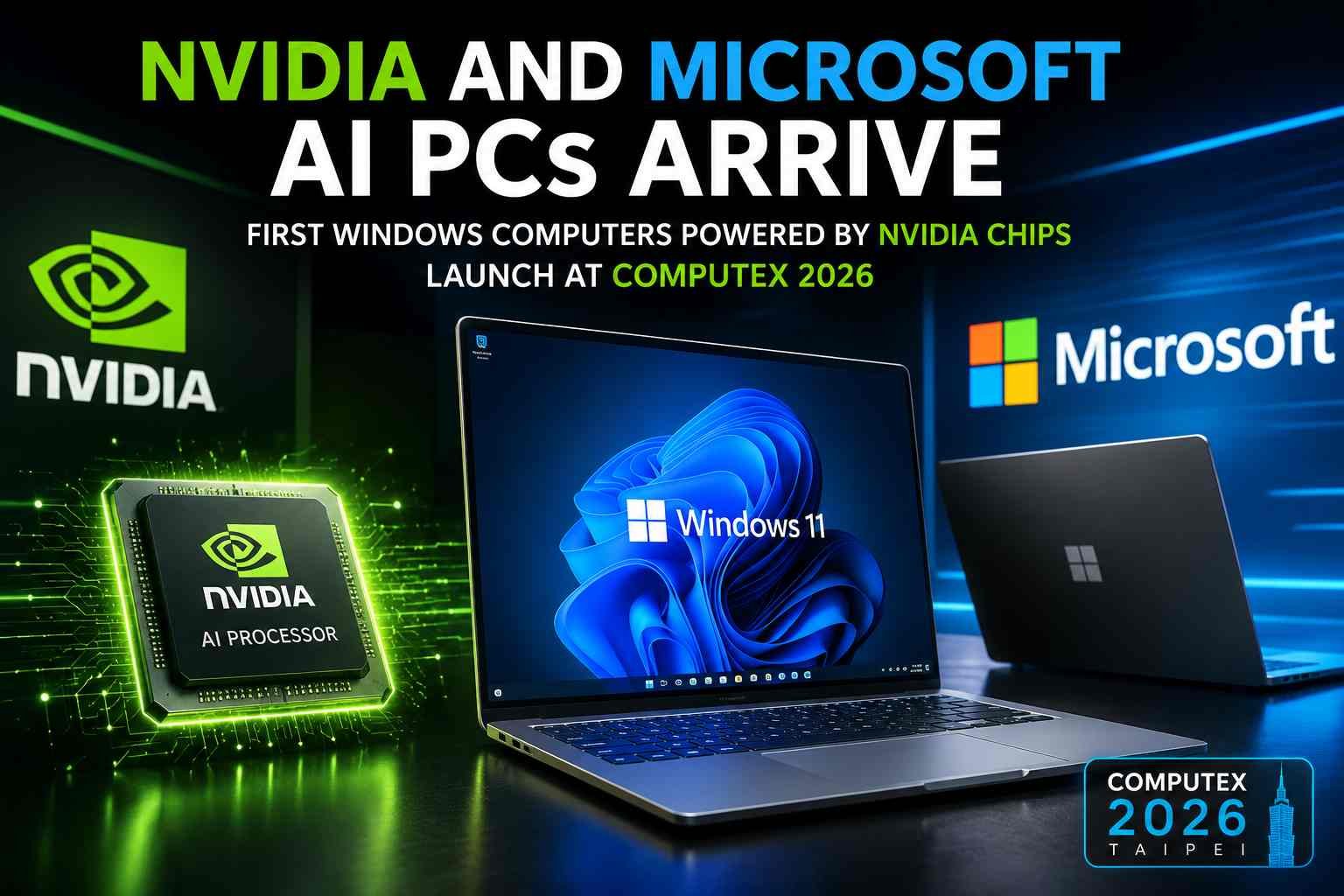
The AI PCs race is entering a new era. Nvidia and Microsoft are preparing to unveil the first Windows computers powered primarily by Nvidia-designed processors, marking one of the biggest shifts in personal computing since Apple’s transition to its custom silicon.
Industry reports indicate that the new devices will be introduced during COMPUTEX 2026 in Taipei and Microsoft’s Build developer conference, creating massive anticipation across the technology sector. The launch could reshape the Windows ecosystem, challenge Intel and AMD’s dominance, and accelerate the adoption of AI-first computing.
Why Nvidia-Powered Windows PCs Matter
For decades, Windows computers have primarily relied on Intel and AMD processors. Nvidia dominated graphics processing, but its move into full-scale PC processors signals a strategic transformation.
The new generation of Windows AI PCs is expected to integrate Nvidia’s advanced AI capabilities directly into the CPU architecture. This means users could experience:
- Faster on-device AI processing
- Improved battery efficiency
- Enhanced AI assistants
- Better content creation performance
- Reduced dependence on cloud computing
The announcement also aligns with Microsoft’s broader strategy to bring more AI workloads directly onto user devices rather than relying solely on cloud infrastructure.
Nvidia’s Entry Into the CPU Market
Nvidia has long been the leader in AI hardware through its GPU lineup. However, entering the CPU market represents a major expansion.
Reports suggest Nvidia’s upcoming chips will use Arm-based architecture rather than traditional x86 designs. This approach mirrors the strategy Apple successfully implemented with its M-series chips.
The rumored Nvidia N1X processor is expected to deliver:
- Advanced AI acceleration
- High-performance graphics integration
- Unified memory architecture
- Improved energy efficiency
- Strong machine learning capabilities
Industry analysts believe these chips could become serious competitors to Apple’s MacBook lineup.
Microsoft’s AI PC Vision
Microsoft has been aggressively promoting AI-powered computing through its Copilot ecosystem.
The company wants AI features to become a core part of Windows rather than optional add-ons. By partnering with Nvidia, Microsoft gains access to some of the world’s most advanced AI hardware technology.
The new systems are expected to support:
- Real-time AI assistants
- Local language processing
- AI image generation
- Intelligent productivity tools
- Advanced video editing enhancements
This strategy could help Microsoft establish a stronger position in the rapidly growing AI PC market.
COMPUTEX 2026 Becomes the Center of the AI PC Revolution
COMPUTEX 2026 is heavily focused on artificial intelligence, AI infrastructure, and next-generation computing technologies.
The event’s theme highlights AI and computing innovations, making it the perfect venue for Nvidia and Microsoft to showcase their new hardware partnership.
Major industry players attending include:
- Nvidia
- AMD
- Intel
- Qualcomm
- Asus
- MSI
- Gigabyte
The AI PC category is expected to dominate headlines throughout the event.
Potential Impact on Intel and AMD
Intel and AMD have controlled the Windows processor market for years.
However, Nvidia’s entry introduces a powerful competitor with unmatched expertise in AI computing. The company already dominates AI data centers globally, and bringing that experience into consumer devices could create substantial disruption.
Possible impacts include:
- Increased competition
- Faster AI innovation
- Better battery life standards
- Lower hardware costs
- More diverse processor options
Consumers are likely to benefit from the increased competition.
What Consumers Can Expect
The first Nvidia-powered Windows laptops are expected to target premium users initially.
Potential use cases include:
Content Creators
Video editors, designers, and digital artists may benefit from faster AI-assisted workflows.
Developers
Local AI model execution could reduce reliance on cloud services.
Business Professionals
AI-powered productivity tools could become significantly more responsive.
Students
Enhanced battery life and integrated AI features may improve learning experiences.
The Future of AI PCs
The arrival of Nvidia CPUs in Windows devices signals a broader transformation in computing.
Instead of measuring performance solely through raw processing power, future devices will increasingly compete based on AI capabilities.
As AI assistants become central to daily workflows, hardware designed specifically for AI tasks will likely become the new industry standard.
Conclusion
Nvidia and Microsoft are preparing to redefine the Windows PC landscape with the debut of Nvidia-powered AI computers. The launch represents a major milestone in the evolution of personal computing and could challenge long-standing industry leaders.
As COMPUTEX 2026 unfolds, the world will get its first detailed look at what may become the next generation of AI-first computing devices.
Frequently Asked Questions
What is an AI PC?
An AI PC is a computer equipped with dedicated hardware designed to run artificial intelligence workloads locally on the device.
When will Nvidia-powered Windows PCs launch?
Reports suggest they will be unveiled during COMPUTEX 2026 and Microsoft’s Build developer conference.
Will Nvidia CPUs replace Intel processors?
Not immediately. Nvidia is entering the market as a new competitor rather than replacing Intel entirely.
What architecture will Nvidia’s processors use?
Industry reports indicate the chips are expected to use Arm-based architecture.
Why is Microsoft partnering with Nvidia?
The partnership supports Microsoft’s goal of bringing advanced AI capabilities directly onto Windows devices.