AI Hardware Revolution 2026: OpenAI’s Device, Google I/O, and the Discovery Engine Reshaping Everything
Published: May 23, 2026 | Reading Time: 6 minutes | Category: AI Technology, Hardware, Drug Discovery
Direct Answer: What Is the AI Hardware Revolution of 2026?
The AI hardware revolution of 2026 refers to the convergence of three seismic shifts happening simultaneously: purpose-built AI companion devices threatening to replace the smartphone paradigm, AI-native operating systems like Android 17 integrating reasoning engines at the OS level, and scientific AI platforms raising billions of dollars to act as autonomous discovery engines in drug development, materials science, and physical robotics. Events in the week of May 19–23, 2026 alone — from Isomorphic Labs’ $2.1B Series B to GPT-5.5 Instant becoming the ChatGPT default — signal that AI is no longer a feature layer. It is the infrastructure.
The Hardware Shift: Is OpenAI Building the Next iPhone?
The most provocative question circling the AI industry in May 2026 is deceptively simple: does the world still need a smartphone? OpenAI, working in close collaboration with legendary designer Jony Ive, appears to be betting the answer is “not the kind we have today.”
Multiple credible reports confirm that OpenAI is developing an “AI-first” companion device — a small, screenless, voice-primary form factor designed to work alongside your phone, then eventually supplant it. Unlike current AI wearables, this device is engineered from the ground up around agent-based interaction. Instead of opening apps, users would dispatch AI agents to complete tasks: booking flights, drafting emails, ordering supplies, scheduling meetings. The app store model that defined the last fifteen years of consumer technology would be rendered obsolete by design.
A second, longer-horizon project — reportedly in partnership with MediaTek and Luxshare — targets a full AI-first smartphone by approximately 2028. That device would replace app-centric navigation with persistent, always-on context awareness powered by large language models running on-device and in the cloud simultaneously.
What makes this moment different from past “iPhone killers” is the underlying model capability. GPT-5.5 Instant, which became the default model for all ChatGPT users on May 5, 2026, delivers reasoning, tool use, and real-time context awareness that simply did not exist in prior generations. The hardware is not racing ahead of the software anymore — it is trying to catch up to it. OpenAI’s device ambition is less about building better glass and aluminum and more about building the first consumer product that takes agentic AI seriously as the primary interaction paradigm.
The stakes are enormous. Apple, Google, and Samsung are all now reacting to a company that did not manufacture hardware eighteen months ago. If OpenAI ships a compelling device in late 2026 or early 2027, the cascade effects on every consumer electronics category — from earbuds to laptops — could be profound.
Google I/O 2026: Reasoning Engines and the Android 17 Reset
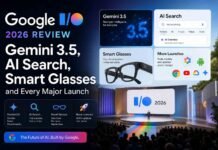
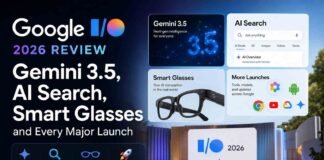
Google’s answer to the AI hardware moment arrived in full force at Google I/O 2026, where the company reframed Android 17 not as an operating system upgrade but as the launch of an intelligent, AI-native platform.
At the center of this reset is Gemini. Google introduced Gemini 3.5 Flash as its fastest reasoning model and unveiled Gemini Omni, a true multimodal architecture capable of consuming and generating across text, image, and video in a single inference pass. But the headline story was Gemini Spark — a personal AI agent that runs persistently across devices, executes background tasks autonomously, and integrates deeply with Google Workspace, Search, and Android system APIs.
Android 17 ships with features that make this concrete for consumers. Create My Widget uses Gemini to build custom home screen widgets from natural language prompts. Rambler in Gboard uses on-device AI to expand, contract, and restructure text as you type. Pause Point introduces contextual AI interruption — the system learns when to surface information proactively versus when to stay silent. These are not gimmicks; they represent Google threading Gemini into every pixel of the user experience.
For developers, I/O 2026 was equally consequential. Google launched the Agent Development Kit (ADK), new protocols including AG-UI and A2UI for agent-to-UI communication, and Firebase AI Logic for cloud-side reasoning pipelines. Android Studio now includes an embedded agent that can scaffold, debug, and deploy entire application features. The message to the developer ecosystem was unmistakable: build for agents first, apps second.
Google’s reasoning engine push extends to hybrid inference — the ability to split model execution between on-device neural processors and cloud TPUs depending on task complexity and latency requirements. This architecture is what will make Gemini-native Android 17 feel qualitatively different from any previous Android release. The phone becomes a node in a distributed reasoning system rather than a self-contained compute device.
AI as a Discovery Engine: The $2.1B Isomorphic Labs Signal
While the consumer AI hardware narrative dominates headlines, the most consequential AI story of May 2026 may be unfolding quietly in a laboratory. On May 12, 2026, Isomorphic Labs secured a $2.1 billion Series B funding round led by Thrive Capital, with participation from Alphabet, GV, MGX, Temasek, CapitalG, and the UK Sovereign AI Fund.
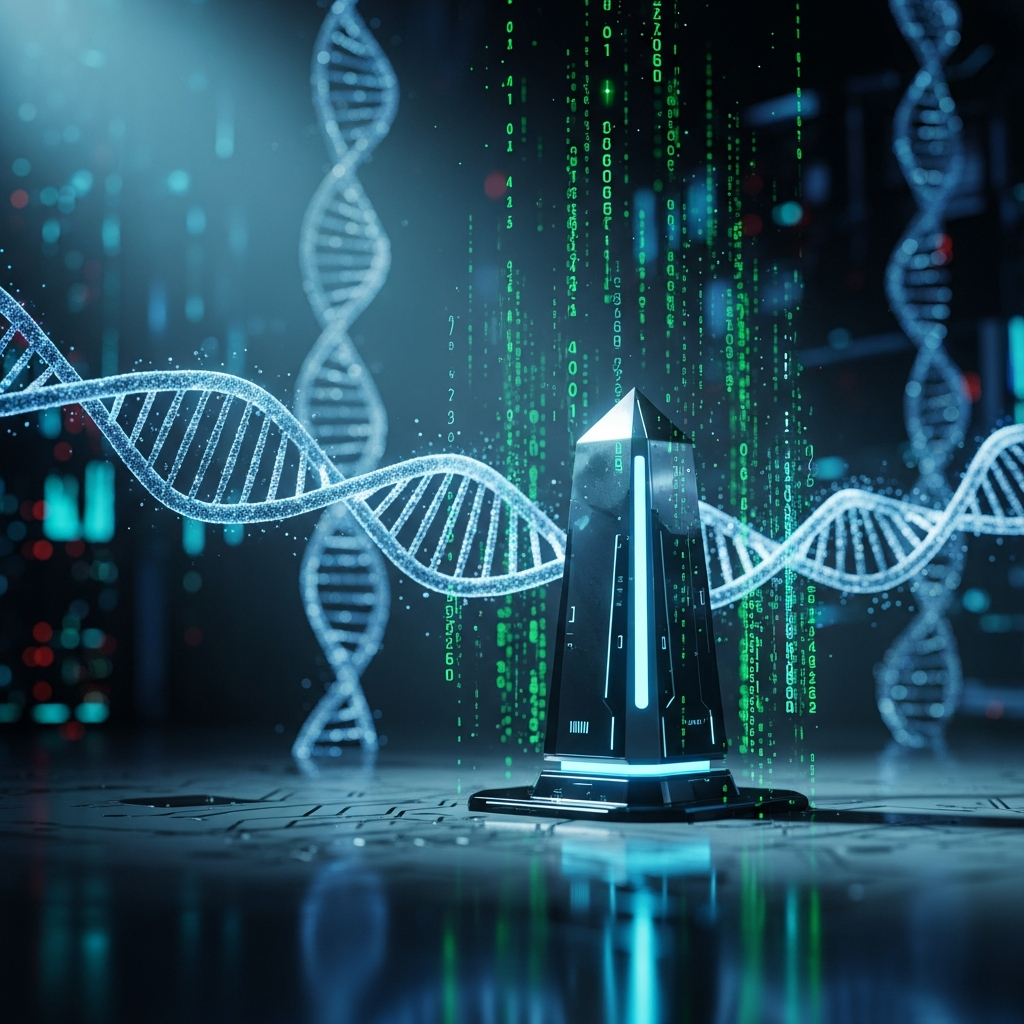
Isomorphic Labs, founded in 2021 and led by Demis Hassabis and President Max Jaderberg, is commercializing the AlphaFold breakthrough into a full-stack AI Drug Design Engine (IsoDDE). The company’s thesis is that AI is not merely a tool that assists drug discovery — it is the discovery engine itself. IsoDDE can hypothesize drug candidates, model their interaction with protein targets, simulate binding efficacy, predict toxicity profiles, and prioritize leads for synthesis, all without a human chemist driving each step.
The $2.1B raise — one of the largest single rounds in life sciences history — validates a model shift that the pharma industry has been debating for a decade. Traditional drug discovery cycles span ten to fifteen years at costs exceeding $2 billion per approved molecule. Isomorphic Labs is targeting a radical compression of both timelines and costs by replacing hypothesis-driven wet-lab iteration with AI-driven generative design loops.
The broader implication extends beyond medicine. If AI can function as a discovery engine in molecular biology, the same architecture applies to materials science (designing new semiconductors, batteries, and polymers), climate technology (engineering carbon-capture enzymes), and agriculture (optimizing crop proteins for yield and nutrition). The Isomorphic raise is a signal that institutional capital has internalized this expansion of scope. The 2026 AI hardware revolution is not just about devices you hold. It is about AI systems that hold the keys to physical reality.
Microsoft + Claude: The Agentic Workflow Takeover
While OpenAI and Google compete for the consumer device market, Microsoft is executing a quieter but strategically decisive move: embedding Claude directly into the productivity tools used by over 400 million people worldwide.
The Microsoft–Anthropic partnership, deepening significantly through early 2026, has placed Claude inside Microsoft 365 Copilot as a first-class AI model. In Word and Excel specifically, Claude powers Agent Mode — a capability that goes far beyond autocomplete or sidebar suggestions. Agent Mode allows Copilot to accept a high-level objective (“Analyze Q1 sales data and draft an executive summary with visualizations”), decompose it into subtasks, execute those subtasks sequentially inside the document, verify its own outputs, and iterate until the result meets the specified criteria.
This is not a chatbot. This is an AI agent operating inside the tools where enterprise knowledge work actually happens. The practical effect is the elimination of an entire category of white-collar task coordination — the kind of work that previously required a junior analyst or a project coordinator to orchestrate across multiple documents and data sources.
Anthropic models are now enabled by default for most commercial Microsoft 365 customers in supported regions. Claude also powers Copilot Studio’s advanced reasoning workflows and the new Researcher feature, which can autonomously gather, synthesize, and cite information from across the web and internal SharePoint libraries in response to complex queries.
The strategic logic is clear: Microsoft is not betting on any single AI provider. By integrating Claude alongside OpenAI’s models, Microsoft ensures that its productivity suite remains the best AI-powered work environment regardless of which foundation model wins the long-run capability race. For enterprise customers, this is the agentic workflow era made tangible and available today.
NVIDIA’s Physical AI: Where the Digital and Physical Worlds Merge
No account of the 2026 AI hardware revolution is complete without NVIDIA, which has spent the last eighteen months transforming itself from a GPU vendor into the full-stack infrastructure provider for Physical AI — AI systems that reason about and act within the physical world.
NVIDIA’s physical AI platform rests on four pillars. Isaac GR00T is an open foundation model for humanoid robots, using a dual-system architecture that mirrors human cognition: a fast reactive system for immediate sensorimotor responses and a slower reasoning system for planning and sequencing multi-step manipulation tasks. GR00T N1.7 is now in early commercial access.
Cosmos, NVIDIA’s world foundation model, generates vast quantities of photorealistic synthetic training environments, solving the data scarcity problem that has historically bottlenecked robot learning. Newton 1.0, developed with major robotics ecosystem partners, provides GPU-accelerated multiphysics simulation with unprecedented fidelity for dexterous manipulation — enabling robot policies trained in simulation to transfer to physical hardware with dramatically higher success rates.
Together, these systems are enabling a new generation of humanoid robots that can generalize across household, industrial, and healthcare environments. NVIDIA’s bet is that every physical robot of the next decade will require the same compute infrastructure as today’s data center AI — creating a hardware market that dwarfs the current GPU opportunity.
FAQ: AI Hardware Revolution 2026
What is OpenAI’s AI hardware device and when will it be released?
OpenAI is developing a voice-first, screenless AI companion device in collaboration with designer Jony Ive. The device is expected to be announced in the second half of 2026, with a potential launch in early 2027. A separate AI-first smartphone project targeting app-free, agent-based interaction is reportedly in development for mass production around 2028.
What did Google announce at Google I/O 2026?
Google I/O 2026 featured the launch of Gemini 3.5 Flash and Gemini Omni, the preview of Android 17 with deep Gemini integration, the introduction of Gemini Spark as a persistent personal AI agent, and developer tools including the Agent Development Kit (ADK), Firebase AI Logic, and hybrid on-device/cloud inference architecture.
Why did Isomorphic Labs raise $2.1 billion in 2026?
Isomorphic Labs raised $2.1 billion in a Series B round led by Thrive Capital on May 12, 2026, to scale its AI Drug Design Engine (IsoDDE), expand its global operations, and advance drug candidates toward clinical trials. The company uses AI to autonomously design, model, and prioritize new drug molecules, aiming to dramatically compress the traditional ten-to-fifteen-year drug development timeline.
What is the Microsoft and Claude (Anthropic) partnership doing in 2026?
Microsoft has integrated Anthropic’s Claude into Microsoft 365 Copilot, enabling Agent Mode in Word and Excel where Claude can autonomously complete multi-step document tasks. Claude is enabled by default for most commercial Microsoft 365 customers and also powers Copilot Studio reasoning workflows and the Researcher feature.
What is NVIDIA Physical AI and what does it include?
NVIDIA Physical AI is NVIDIA’s platform for building AI systems that operate in the physical world. It includes Isaac GR00T (a humanoid robot foundation model), Cosmos (a world model for synthetic training data), Newton 1.0 (a GPU-accelerated physics simulation engine), Isaac Lab 3.0, and Jetson Thor for on-robot compute. Together, these tools enable humanoid robots to learn and generalize across real-world tasks.
What is GPT-5.5 Instant and who can use it?
GPT-5.5 Instant became the default model for all ChatGPT users on May 5, 2026, replacing GPT-5.3 Instant. It is available to free, Plus, Pro, Business, and Enterprise users, and is accessible via the OpenAI API as “chat-latest.” It features improved reasoning, tool use, and real-time context awareness compared to its predecessors.
Is the smartphone era ending because of AI hardware?
Not immediately, but the foundations are shifting. OpenAI’s AI-first device strategy, Google’s Gemini-native Android 17, and the broader move toward agent-based interaction suggest that app-centric smartphone computing is facing its first genuine architectural challenge. The transition is likely to unfold over three to five years rather than overnight.
What is an AI Discovery Engine?
An AI Discovery Engine is an AI system that autonomously generates, tests, and prioritizes scientific hypotheses — functioning as the core driver of research rather than a tool that assists human-led research. Isomorphic Labs’ IsoDDE is the leading example in drug discovery, but the architecture applies equally to materials science, climate technology, and agricultural biotechnology.
How does Gemini Spark differ from previous Google Assistant features?
Gemini Spark is a persistent, background-running personal AI agent that can execute multi-step tasks autonomously across apps, devices, and Google services. Unlike Google Assistant, which primarily responded to discrete voice commands, Gemini Spark initiates actions, monitors outcomes, and completes workflows without continuous user prompting.
What does the AI hardware revolution mean for enterprise productivity?
The AI hardware revolution means that enterprise productivity is shifting from human-orchestrated workflows to AI-agentic workflows. Microsoft 365 Copilot with Claude, Google Workspace with Gemini Spark, and tools like Copilot Studio represent a new category of software where AI agents execute, not just suggest. This will compress task completion times, reduce coordination overhead, and gradually redefine which cognitive tasks require human judgment versus AI execution.